

Madeline Cardone
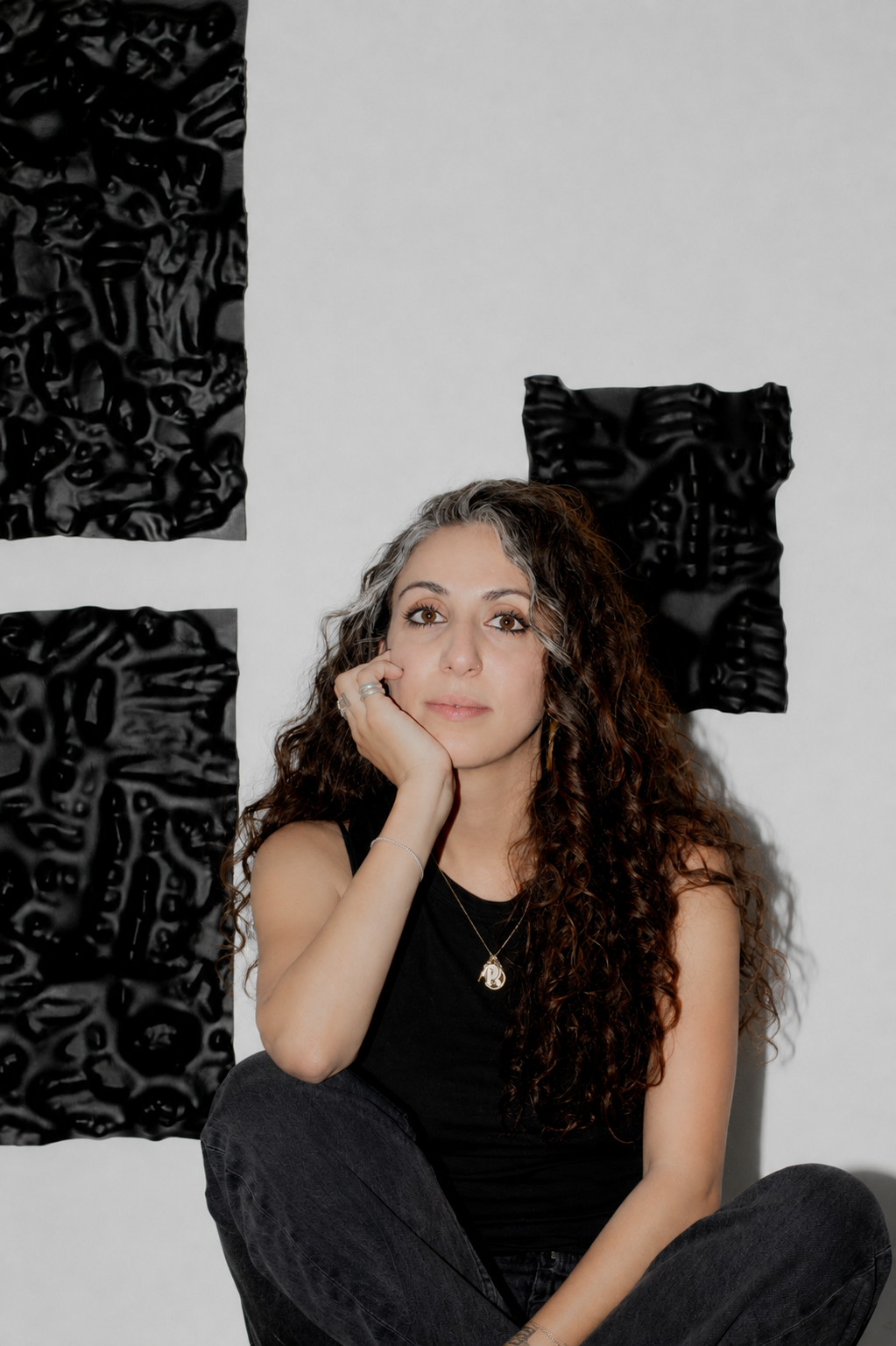
Artist Madeline Cardone - pic by Cassie Abraham
Madeline Cardone's sculptural practice explores the thresholds between spaces, embodied memory, and material perception, drawing on a broader interest in archaeological, anatomical and architectural theory. Working primarily in glass, she treats the material like a "skin," using slumping techniques to connect ideas of the body-as-landscape to the way we experience the world around us, its phenomenological qualities, and its capacity to hold memory, preservation and decay.
Madeline's works in glass are not only formal studies, but are explorations of proximity and relationships between forms, people, the past and now. She challenges the limits and lifecycles of her materials through inviting slow, tactile contemplation and evoking a strange familiarity by recontextualising and abstracting space and form, shifting viewers' expectations of what materials can hold, reflect and become.
It was at Art School in Canberra that Madeline first encountered the world of glass. She had no prior experience with the medium before applying as a student of the Glass Workshop at the ANU School of Art and Design, and she has remained with the craft ever since. "There wasn't a specific moment when I felt I wanted to spend my life making art, as I feel it has been culminating over my whole life, and probably solidified in my undergraduate years," she reflects.
"Glass has a chokehold over anyone who uses it in their practice, as it is as seductive and exciting as it is challenging and demanding. For me, glass has brought things out of my brain and into a material that feels exactly how I see and experience the things I am fascinated by in the world. Right now, I'm exploring the cross section of architecture, archaeology and the human body through the lens of glass, and I feel this will be an ongoing trajectory.”
Her practice today explored how glass is in a state of constant flux - she plays with how it bends and resists, pushes and pulls. Sheets transform into tense yet fluid, alien but recognisable forms that protrude from the surface, reminiscent of fabric or skin. Her Italian heritage and interest in archaeology and ancient ruins meets her Australian education in glass - a material that is constantly explored through the lense of subtlety of surface and refinement of form.
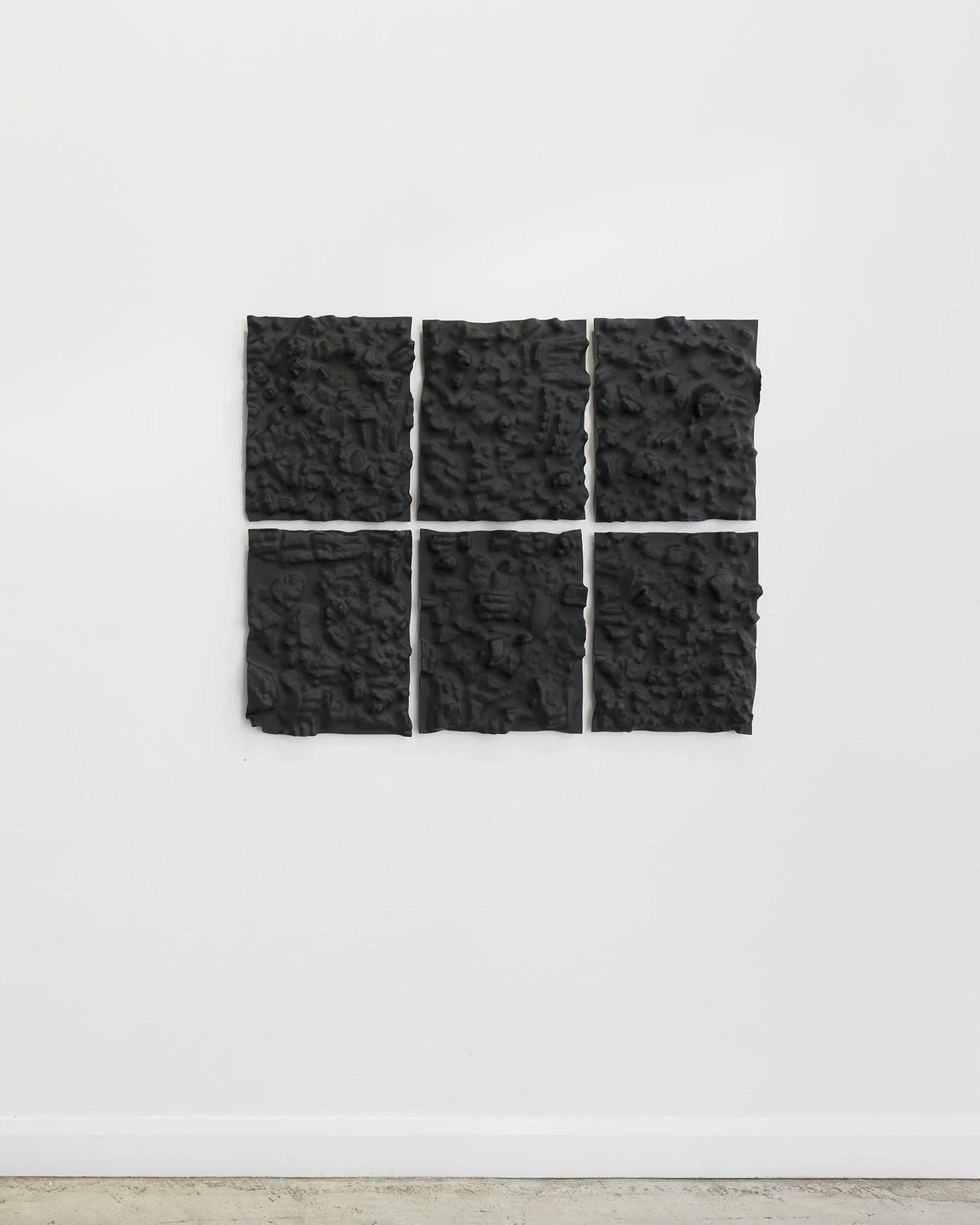
Installation - image by Brenton McGeachie
Madeline’s process combines collecting, mould making and slumping, often entering themes of the body and the land, of history and relics. One of her most poignant pieces emerges from a bone-like structure first shaped by her ceramicist mother during her own student days, four decades earlier. Through this reclamation, Madeline upholds this continuum of creation from one generation's material memory into another.
Madeline has exhibited nationally and internationally since 2017. Honours include the Bassett Downs Honours Scholarship in Glass, the Vicki Torr Emerging Artist Prize, and the Aldo Bellini Acquisition Award for the Milano Vetro Under-35 Glass and Design Competition. Her work has recently been acquired by the National Art Glass Gallery in Wagga Wagga and the Castello di Sforzesco in Mlian.
Beyond her own studio practice, Madeline is attentive to the wider condition of craft in Australia. "Craft in Australia appears to be thriving," she says. "It feels increasingly interdisciplinary with the merging of traditional making, digital technologies and design industries. Despite the rise of AI, there seems to be a celebration of the handmade, and an innate appreciation for materiality. Sustainability and material consciousness are also becoming more important to craft practices, almost a non-negotiable."
She is candid, too, about the pressures facing the field.
"There is no denying that there has been a decline in specialised skill education and training, and funding is a constant fight. This brings to light the importance of community, knowledge sharing to preserve and maintain research and experimentation. I think the future will depend on how traditional skills, new technologies and contemporary ideas grow to exist alongside, and elevate each other."
Follow Madeline’s work on Instagram at https://www.instagram.com/madeline.cardone/